

In recent years the rise of Artificial Intelligence has rapidly accelerated the pace of technological change – its impacts are being felt across multiple industries and foodservice is no exception. In this issue we look at two innovative uses of AI in foodservice – the Botinkit robot chef and the AerMeal meal measurement and monitoring solution, the applications of which are broader than you might at first think.
More control over product consistency
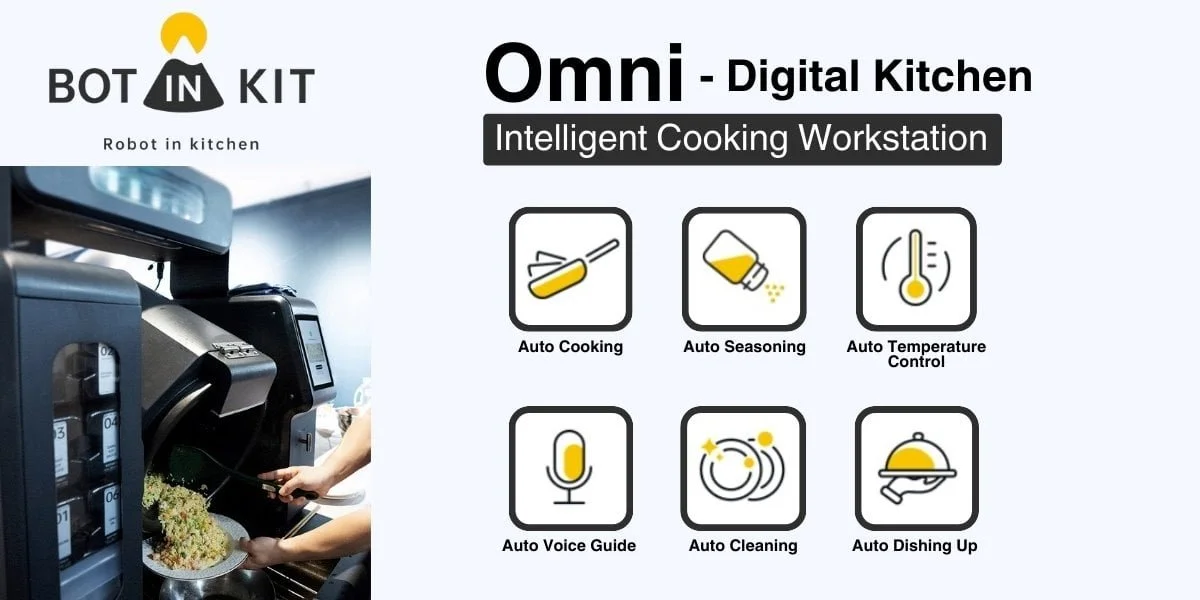
Botinkit (an abbreviation of ‘robot in kitchen’) is an AI-driven robot chef, which Australian distributor Caterlink says is the first such unit designed specifically for foodservice. According to Caterlink Business Development Manager Angus McNamara, “nothing else on the market compares to this unit in terms of capability and intuitiveness of use.”
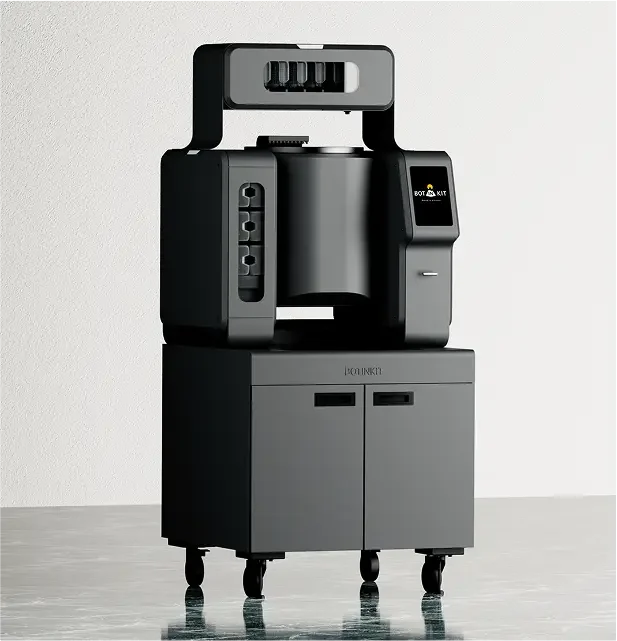
BOTINKIT AI-driven robot chef
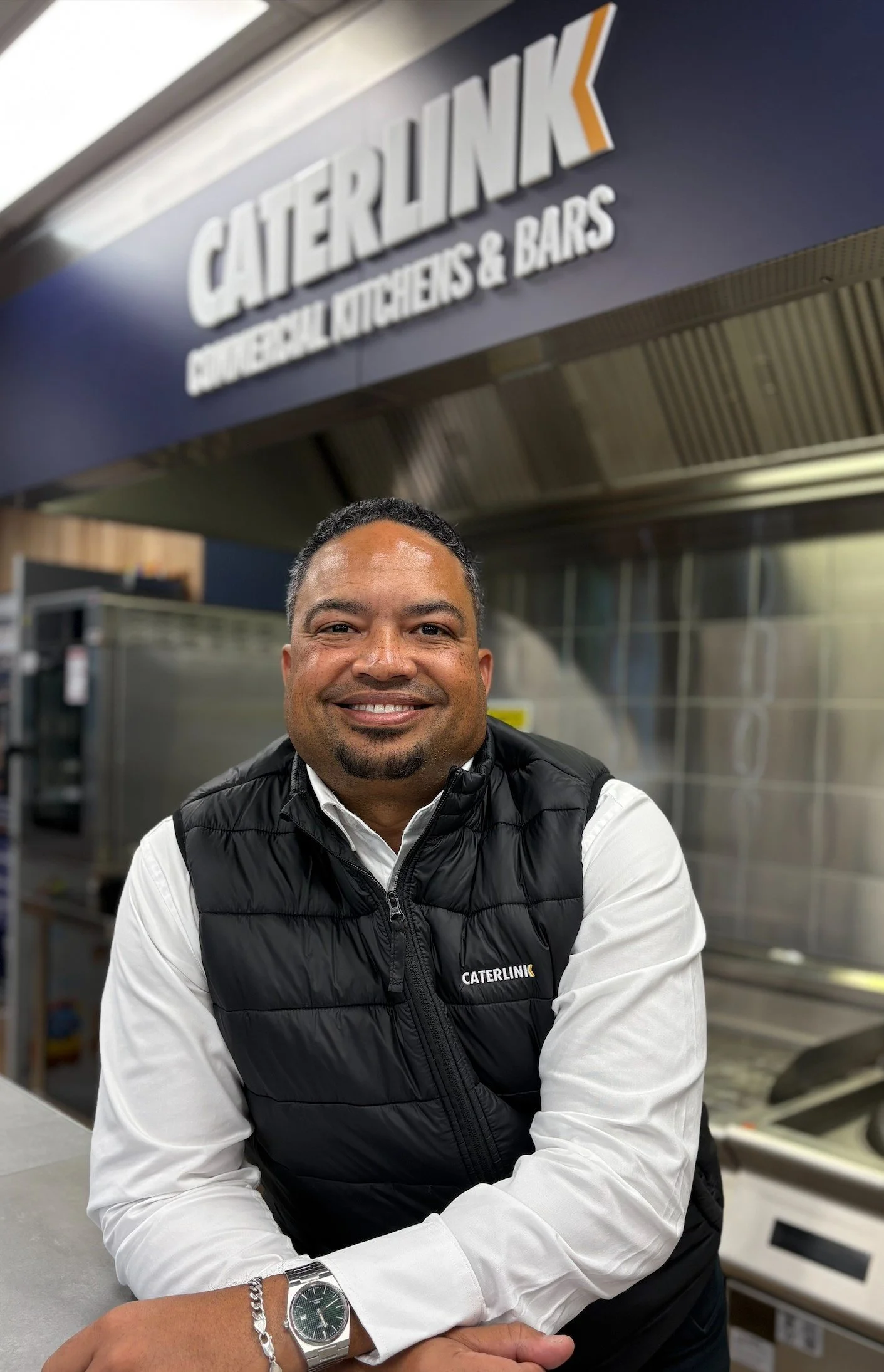
caterlink Business Development manager Angus Mcnamara
“Botinkit allows operators to take more control over consistency of product and is ideal for medium to largescale servery areas,” Angus tells us. “It also delivers terrific portion control which ensures waste minimisation.”
“The units can run 24/7 so you can get meals out to your customers faster”
“Great time-saving solution”
While acknowledging Botinkit is never going to replace an a la carte chef, Angus describes it as “ideal for those operations which are filling bain maries with pre-prepared food – for example food court buffets, canteens, health and aged care dining, high volume foodservice areas, even pre-packaged food producers. It's a great time saving solution to free up staff to focus on other areas by increasing automation in the kitchen. We all know most cooks are fresh and ready to go at the beginning of service but by the end of the evening they’re not necessarily working at the same level.
“This is where Botinkit can help by ensuring consistency and eliminating the risk of human error. The units can run 24/7 so you can get meals out to your customers faster and wastage is minimised because you’ll never get a burnt dish or one that tastes inconsistent from the one before.”
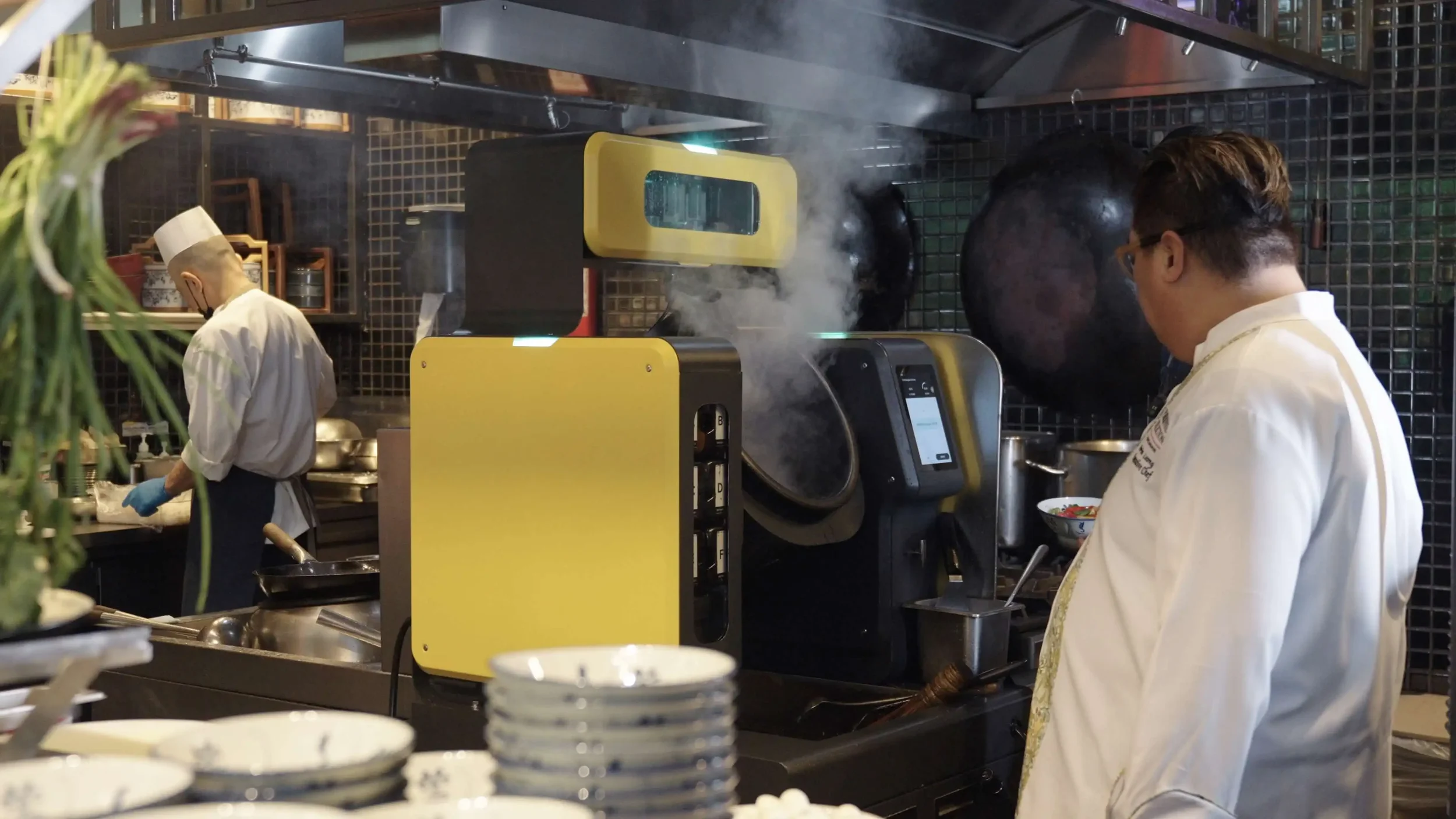
The centrepiece of the unit is a cast iron pot built for durability with a rectangular head sitting over the top from which the recipe’s liquid/sauce components are dispensed (everything from soy sauce to oil and water). Dry seasonings are dispensed from a separate repository.
“Basically you create a menu, program it into the unit using the touchscreen or phone app, then put your dry seasonings – like herbs and spices – into one repository and the millilitre amounts of liquid into the other,” Angus explains. “The core protein and carb ingredients are placed into the pot and then you start cooking. You have control over the cooking heat, such as specifying high heat at the beginning and low heat at the end. As the recipe cooks, the dispensing of your dry and liquid ingredients, and corresponding balance of flavouring and heat, is controlled by the robot. You end up with a totally consistent presentation and taste. This means the next person who comes in and accesses that recipe program knows the unit will cook it exactly the same each time.”
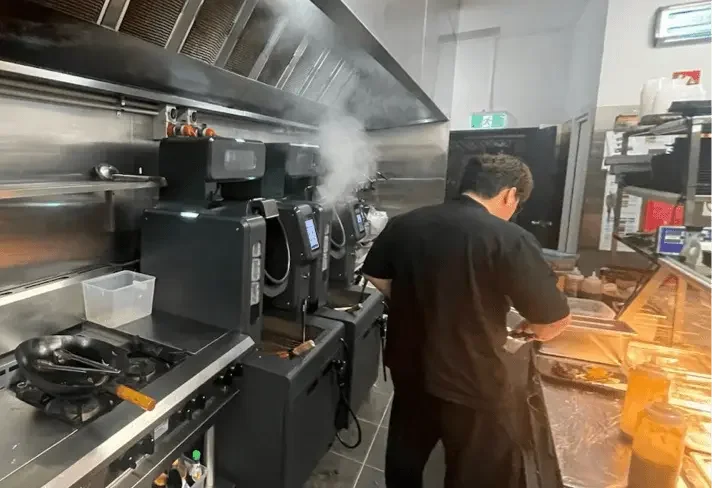
“It’s ideal for pasta, risotto, stir fries and Asian cuisine like rice and noodles”
Once the recipe is cooked, the unit automatically tilts and rotates so you can serve up. “It’s ideal for pasta, risotto, stir fries and Asian cuisine like rice and noodle dishes,” Angus says. “With our head office in WA, we’ve attracted a lot of interest from mining sites because they’re looking to elevate their food offering for staff and provide more consistent and nutritious meals but they have a problem finding enough chefs who will work out there, especially with the current staff shortages in the industry. They want to have a more flexible menu, not just burgers and chips.”
Facilitating menu diversification
Angus says pubs are also finding applications for the Botinkit: “they too are looking to diversify the menu – a lot are leaning towards Asian style, especially rural pubs where again there are staff shortages. Botinkit is ideal for feed and serve because it can be run by staff who don’t need to think about cooking temperatures and so on. It’s ideal for Asian buffets in cafes and food courts – anywhere where they’re serving from a bain marie. Staff canteens, lunch and dinner service for hotel-motels are other areas where the unit is a good fit.”
“When people see the unit in action, they understand its value and are keen to trial it”
He acknowledges it is new tech – “there are only 70 units in Australia so far but interest is growing. As the exclusive Australian distributors we’re looking for the early adopters, and we find that especially when people see the unit in action, they understand its value and are keen to trial it. We provide a lot of support – we train staff, help them set up and design menus, assist with balancing of flavours and temperatures and so on. Recently we had a client in our training session and when he saw what the unit could do he bought two more on the spot. It does change your mindset once you see what it’s capable of.”
Adapting recipes based on user preference
“You can program in as many as 1000 different recipes”
The Botinkit’s footprint is 1m x 1m. It has a voice that speaks to you and it can cook dishes from a single serve up to 3 to 4kg. “There are restaurants in China and Singapore that have half a dozen of these and they use them as fast food units doing single serve a la carte,” Angus says. “In Australia we’re still in the early stages of educating the market about its applications. One unit will do quite a bit to streamline your menu but with two you can elevate further to doing much more than you can with one. You can program in as many as 1000 different recipes, based on the combination of spices and liquid sauces you input.”
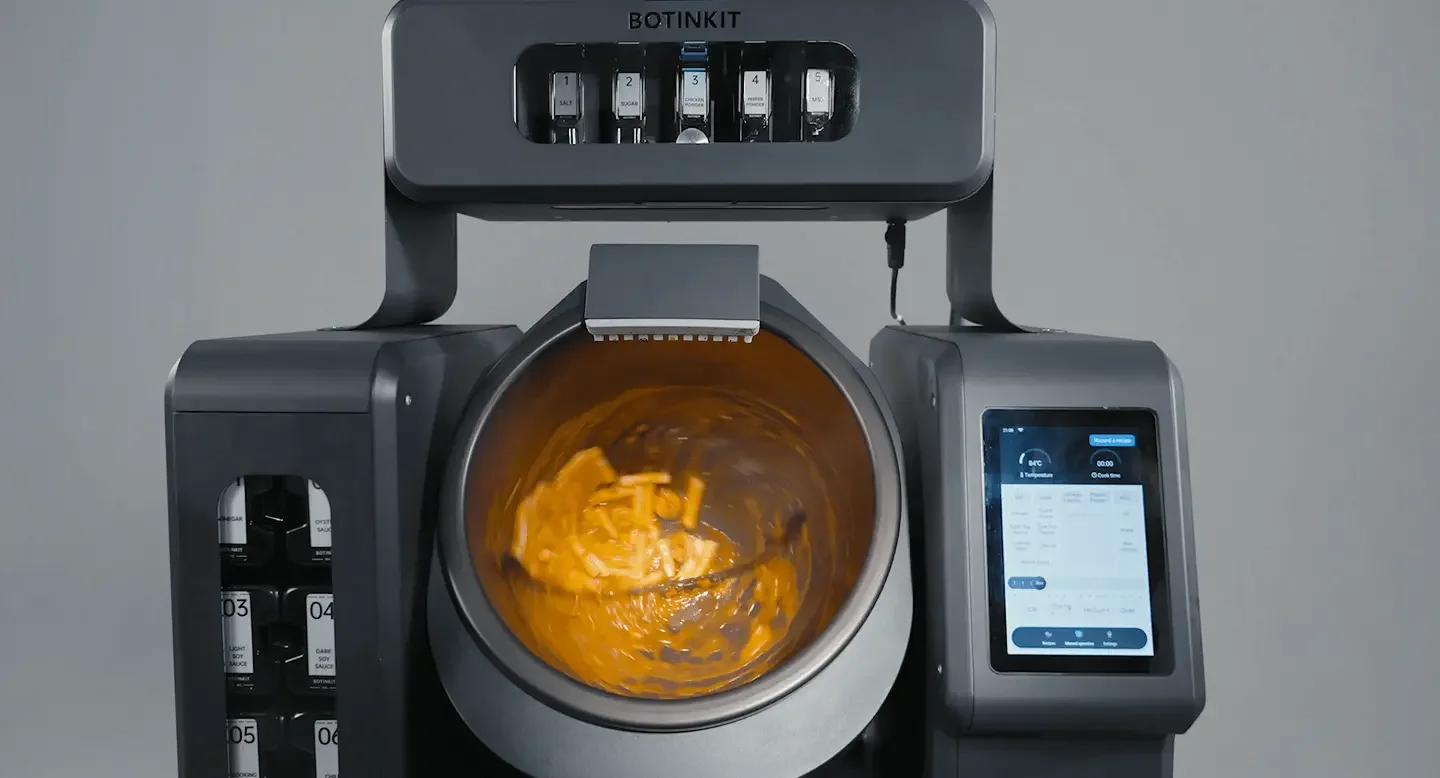
With a Botinkit installed, the initial work is getting the recipe component right. “Once that’s done it’s just a question of the user following the steps, taking the portions of each ingredient and loading them in,” Angus advises. “And this is where you can really see how the portion control element pays off. We had a lady in Melbourne who owns a restaurant and she was struggling to get enough staff so she trialled a unit. The week after we did the training with her, the entire staff went down with Covid and she was left on her own. Rather than shut up shop for the week, she put all the ingredients for the recipes into the Botinkit – she’s not a chef but she was able to keep the business operating and serve the food to customers, so that really shows how well it works. And like many AI applications in ovens, this unit learns from what you cook – it actually starts to adapt recipes based on user preferences.”
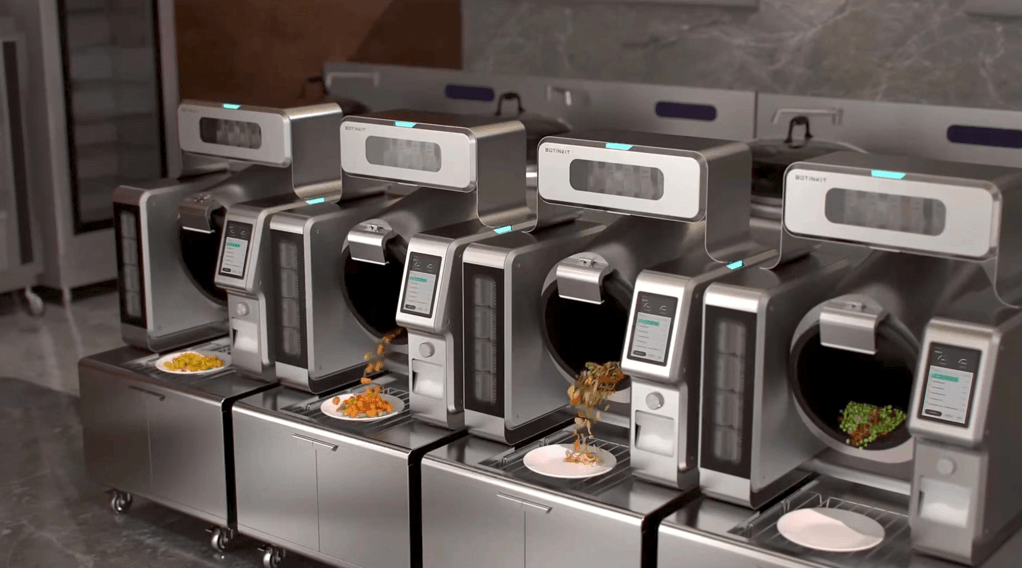
Caterlink’s current focus is on raising awareness of the Botinkit in foodservice. “We have a showroom in Perth and are setting two up in Melbourne so people can come in and see it in action and taste the food it produces. Once you do that it changes your concept of where AI is going in cooking.”
See Botinkit in action at https://caterlink.com.au/2024/08/27/botinkit-omni-ai-digital-kitchen-meet-your-new-kitchen-robot